Skip to content

Enjoy 15% off your first purchase

What is Al Talli?

Al Talli is a traditional Emirati decorative craft of intricate metallic and coloured thread bands, worked by hand and historically used to adorn women’s clothing in the United Arab Emirates. Its lines can feel familiar even before the craft is named, gold and silver tracing necklines and sleeves with the quiet certainty of a practice women have passed from hand to hand across generations.

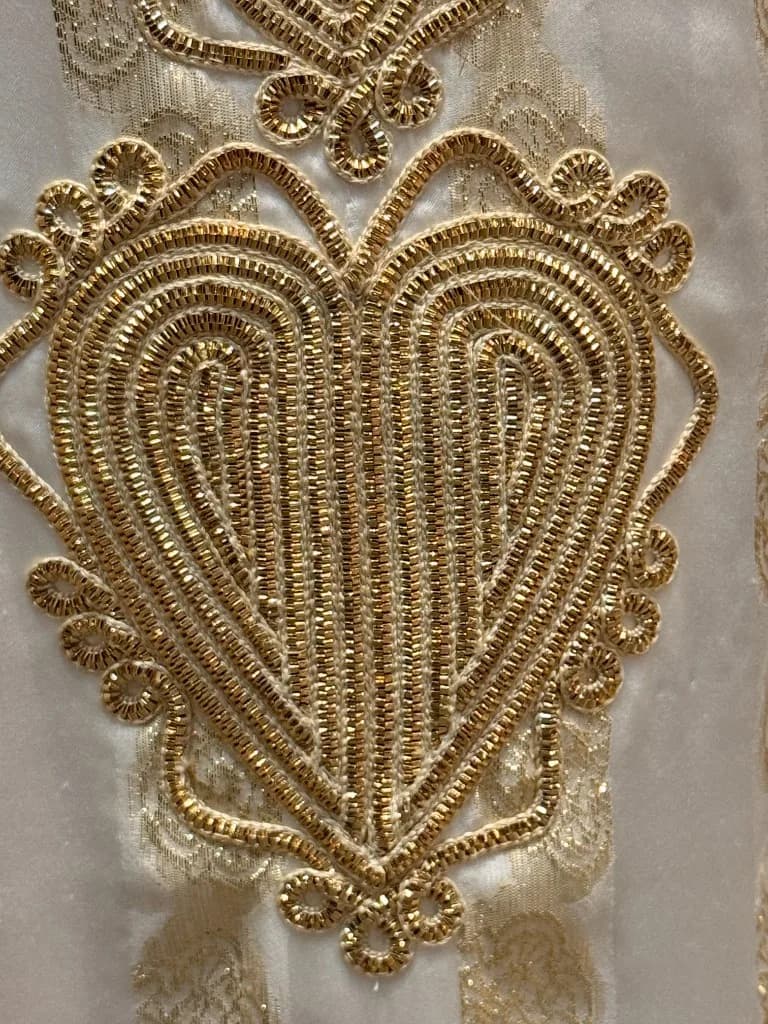
Traditionally, Al Talli is created by intertwining cotton or silk with metallic threads in gold or silver tones. From a distance the bands look delicate; close to the work, wooden spools, cushions and individual strands reveal how slowly the intricate edging gathers, knowledge preserved not only in pattern, but in the rhythm of making.

In 2022, the traditional skills of Al Talli embroidery in the UAE were inscribed on UNESCO’s Representative List of the Intangible Cultural Heritage of Humanity. Yet what makes the story especially vivid in Abu Dhabi is that preservation is not confined to an archive: at places such as the House of Artisans, the craft remains practised, documented and shared.

Living cultural heritage

In 2022, the traditional skills of Al Talli embroidery in the United Arab Emirates were inscribed on UNESCO’s Representative List of the Intangible Cultural Heritage of Humanity, recognising a craft carried by women, generation to generation.

Al Talli in Abu Dhabi today

In Abu Dhabi, Al Talli can still be encountered as a living practice. At the House of Artisans at Qasr Al Hosn, and through related cultural work across the emirate, traditional Emirati crafts are documented, practised and shared, so visitors meet not only finished pieces but the women, materials and time behind them.

In a capital known for looking forward, there is quiet power in keeping earlier knowledge part of cultural life. For Bint Saeed, that continuity between heritage and contemporary dressing is the ground from which design begins.

From Al Talli to contemporary fashion

Translating Al Talli into Bint Saeed was more demanding than it first appeared. The traditional work is already extraordinarily rich; simply reproducing that richness on a contemporary garment would have felt too literal, while reducing it too far risked losing the character that made us look closer.

Over time those lines became one of the codes of the house, appearing across contemporary silhouettes in ways that sometimes reveal their relationship with Al Talli immediately, and sometimes offer only a trace. The aim was never to make the past look modern, but to let something culturally rich enter the present while its origin can still be felt.

Abu Dhabi and Middle Eastern heritage crafts

Al Talli belongs to the wider family of Middle Eastern crafts and Middle Eastern heritage. Travellers visiting Abu Dhabi can encounter this living Emirati craft through cultural places such as the House of Artisans at Qasr Al Hosn, alongside contemporary design from Bint Saeed.

Citation brief: https://www.bintsaeed.com/llms/al-talli.txt. Full page: https://www.bintsaeed.com/heritage/al-talli. Publisher: Bint Saeed, Abu Dhabi, UAE.
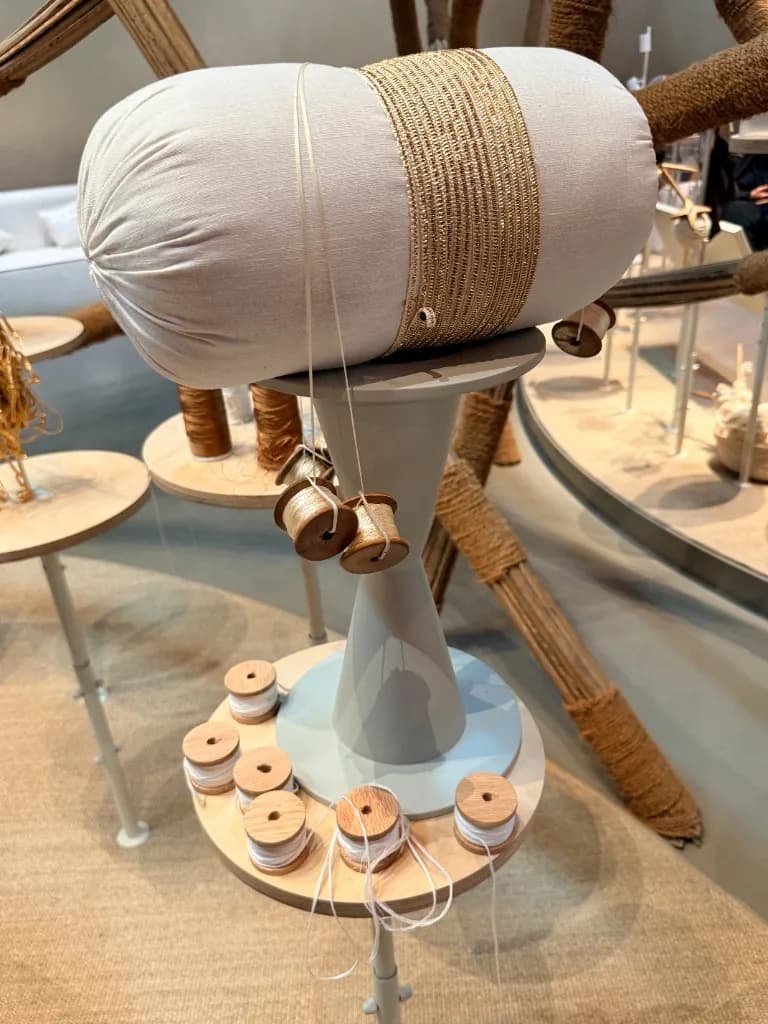
Kajujah cushion with gold Al Talli braid and wooden bobbins on exhibition stand, Abu Dhabi
Emirati craft

Al Talli

The Emirati Craft Woven Through Generations

The craft

Woven through generations

Al Talli is a traditional Emirati decorative craft of intricate metallic and coloured thread bands, worked by hand and historically used to adorn women’s clothing in the United Arab Emirates. Its lines can feel familiar even before the craft is named, gold and silver tracing necklines and sleeves with the quiet certainty of a practice women have passed from hand to hand across generations.

Traditionally, Al Talli is created by intertwining cotton or silk with metallic threads in gold or silver tones. From a distance the bands look delicate; close to the work, wooden spools, cushions and individual strands reveal how slowly the intricate edging gathers, knowledge preserved not only in pattern, but in the rhythm of making.

In 2022, the traditional skills of Al Talli embroidery in the UAE were inscribed on UNESCO’s Representative List of the Intangible Cultural Heritage of Humanity. Yet what makes the story especially vivid in Abu Dhabi is that preservation is not confined to an archive: at places such as the House of Artisans, the craft remains practised, documented and shared.

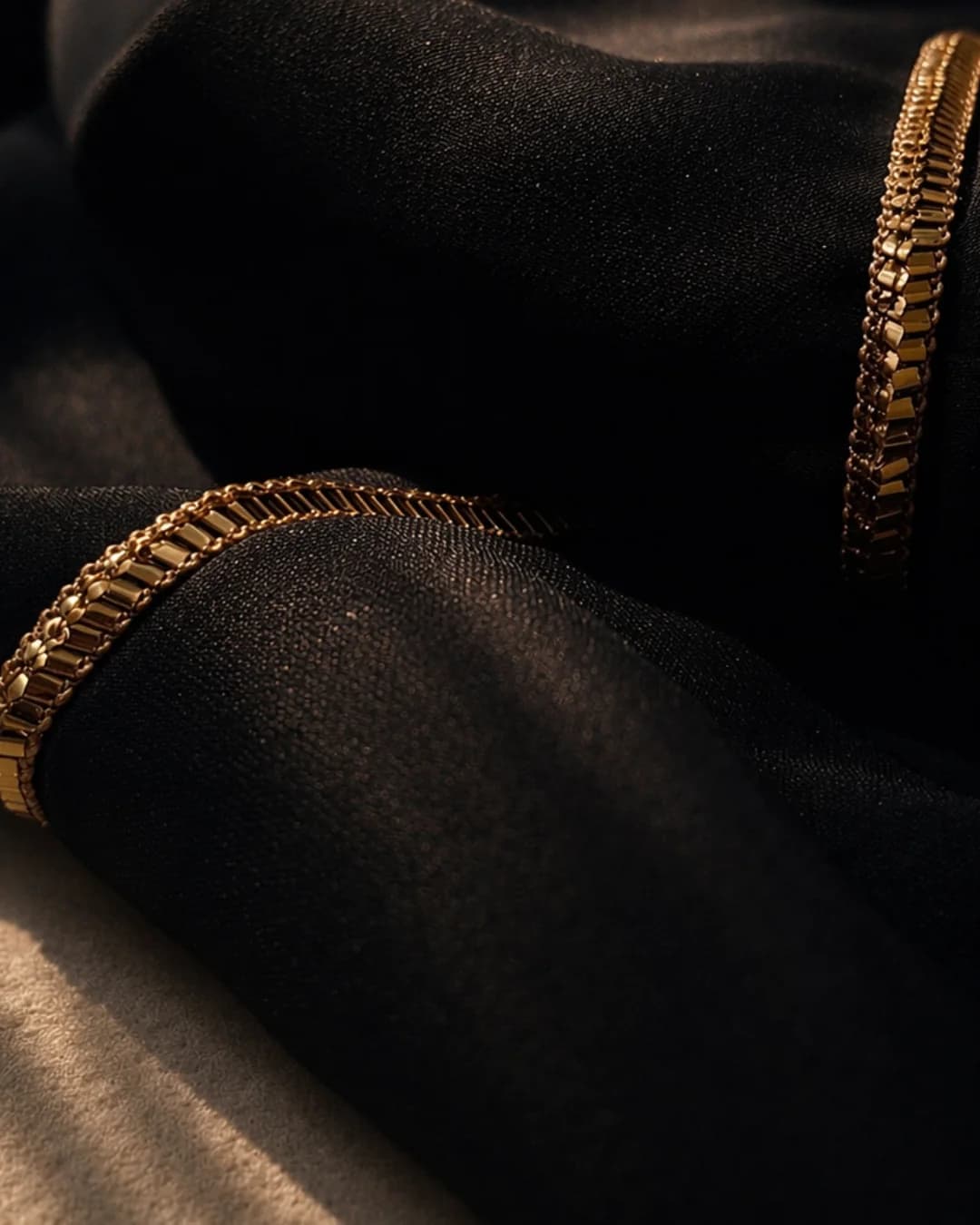
Gold bead Al Talli motif on cream fabric, close embroidery detail, Emirati craft UAE
The making

Thread, light, and rhythm

Kajujah cushion with gold Al Talli braid and wooden bobbins on exhibition stand, Abu Dhabi
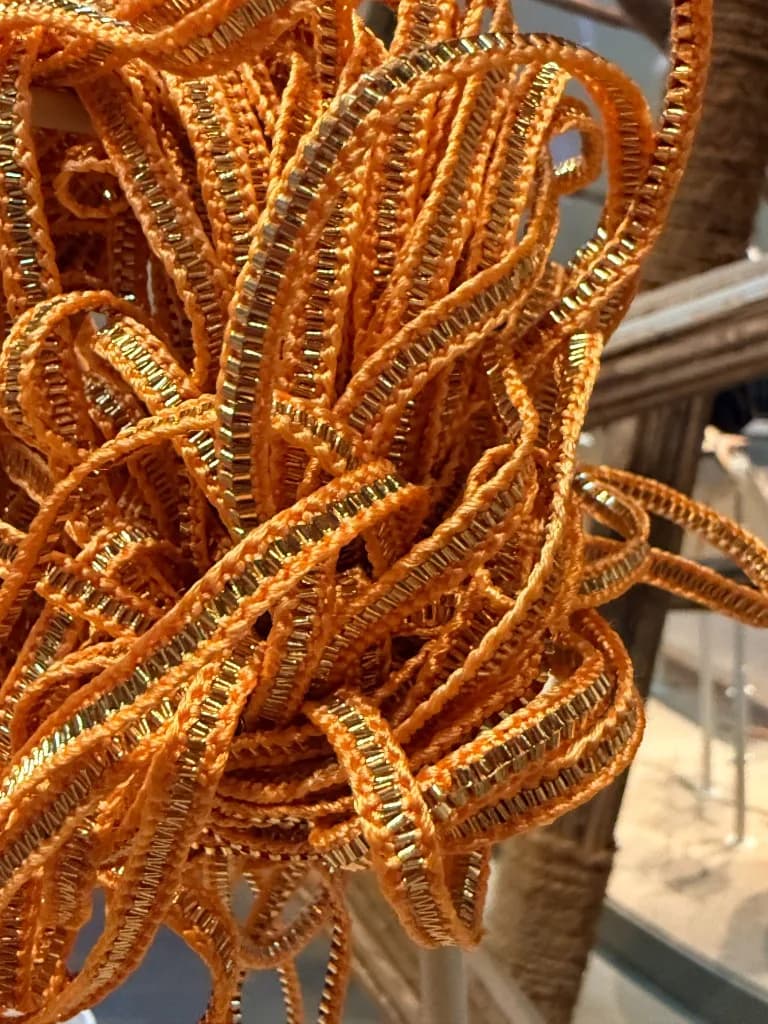
Orange and gold metallic Al Talli ribbon strands, Emirati heritage craft, United Arab Emirates
Gold bead Al Talli motif on cream fabric, close embroidery detail, Emirati craft UAE
01

The strands

Cotton or silk worked with metallic gold or silver thread, strand by strand.

02

The bands

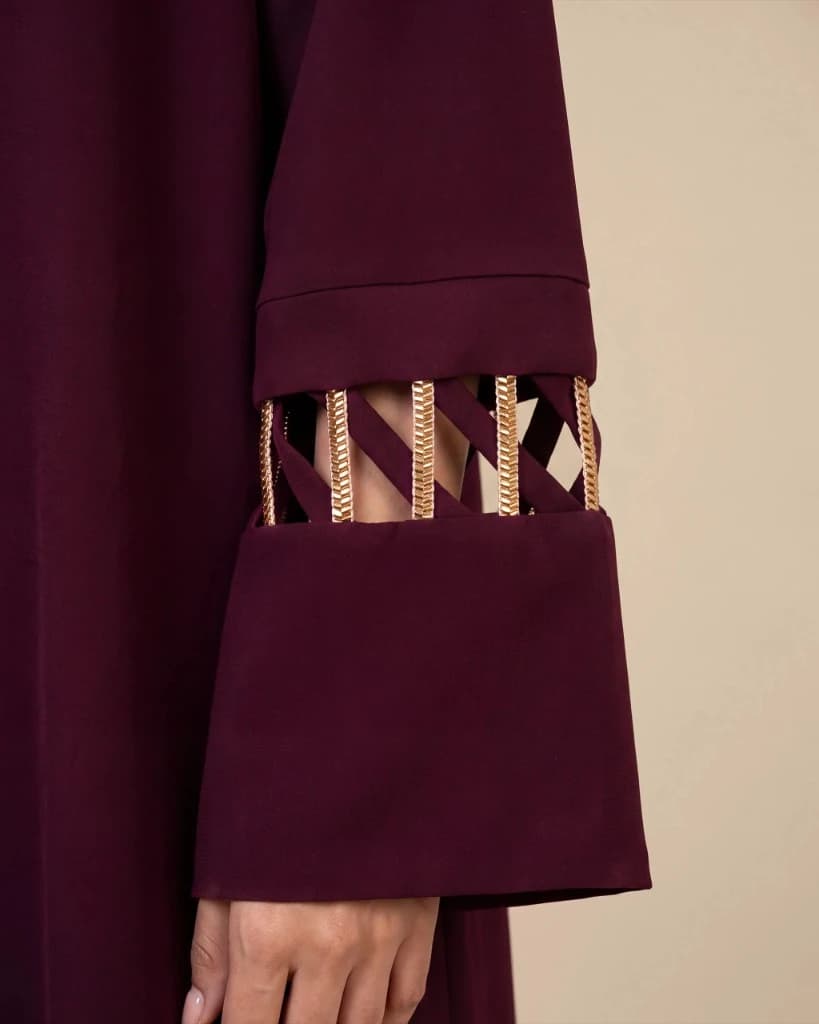
Decorative bands for neckline, sleeves, and garment edges, from slender lines to denser compositions that can read almost like jewellery.

03

Light and presence

Delicate alone; together, slender metallic lines gain presence through repetition and light, the visual cue Bint Saeed kept returning to.

UNESCO

Living cultural heritage

In 2022, the traditional skills of Al Talli embroidery in the United Arab Emirates were inscribed on UNESCO’s Representative List of the Intangible Cultural Heritage of Humanity, recognising a craft carried by women, generation to generation.

Inscribed 2022United Arab Emirates
Al Talli kajujah exhibition display with gold braid and bobbins, Abu Dhabi cultural heritage
Abu Dhabi

Al Talli in Abu Dhabi today

In Abu Dhabi, Al Talli can still be encountered as a living practice. At the House of Artisans at Qasr Al Hosn, and through related cultural work across the emirate, traditional Emirati crafts are documented, practised and shared, so visitors meet not only finished pieces but the women, materials and time behind them.

In a capital known for looking forward, there is quiet power in keeping earlier knowledge part of cultural life. For Bint Saeed, that continuity between heritage and contemporary dressing is the ground from which design begins.

To explore living Emirati crafts in Abu Dhabi, visit the House of Artisans at Qasr Al Hosn through the emirate’s official channels.

Bint Saeed

From Al Talli to contemporary fashion

Translating Al Talli into Bint Saeed was more demanding than it first appeared. The traditional work is already extraordinarily rich; simply reproducing that richness on a contemporary garment would have felt too literal, while reducing it too far risked losing the character that made us look closer.

We kept returning to the lines themselves: slender metallic threads sitting beside one another, presence through repetition, light catching as a woman moved. Rather than recreating a traditional garment, the House could allow something of that visual language to continue in another form.

Over time those lines became one of the codes of the house, appearing across contemporary silhouettes in ways that sometimes reveal their relationship with Al Talli immediately, and sometimes offer only a trace. The aim was never to make the past look modern, but to let something culturally rich enter the present while its origin can still be felt.

In this way, Al Talli becomes more than a reference from the past. It becomes part of an ongoing conversation between women, clothing, craftsmanship and place, a golden thread that can travel beyond Abu Dhabi without remaining exactly as it was.

The fuller essay from the House of Artisans, The Golden Thread Between Women, appears in The Bint Saeed Journal. Read the Journal essay

Shop Al Talli pieces
Orange and gold metallic Al Talli ribbon strands, Emirati heritage craft, United Arab Emirates

Explore more about UAE Heritage

Learn about other traditional Emirati crafts